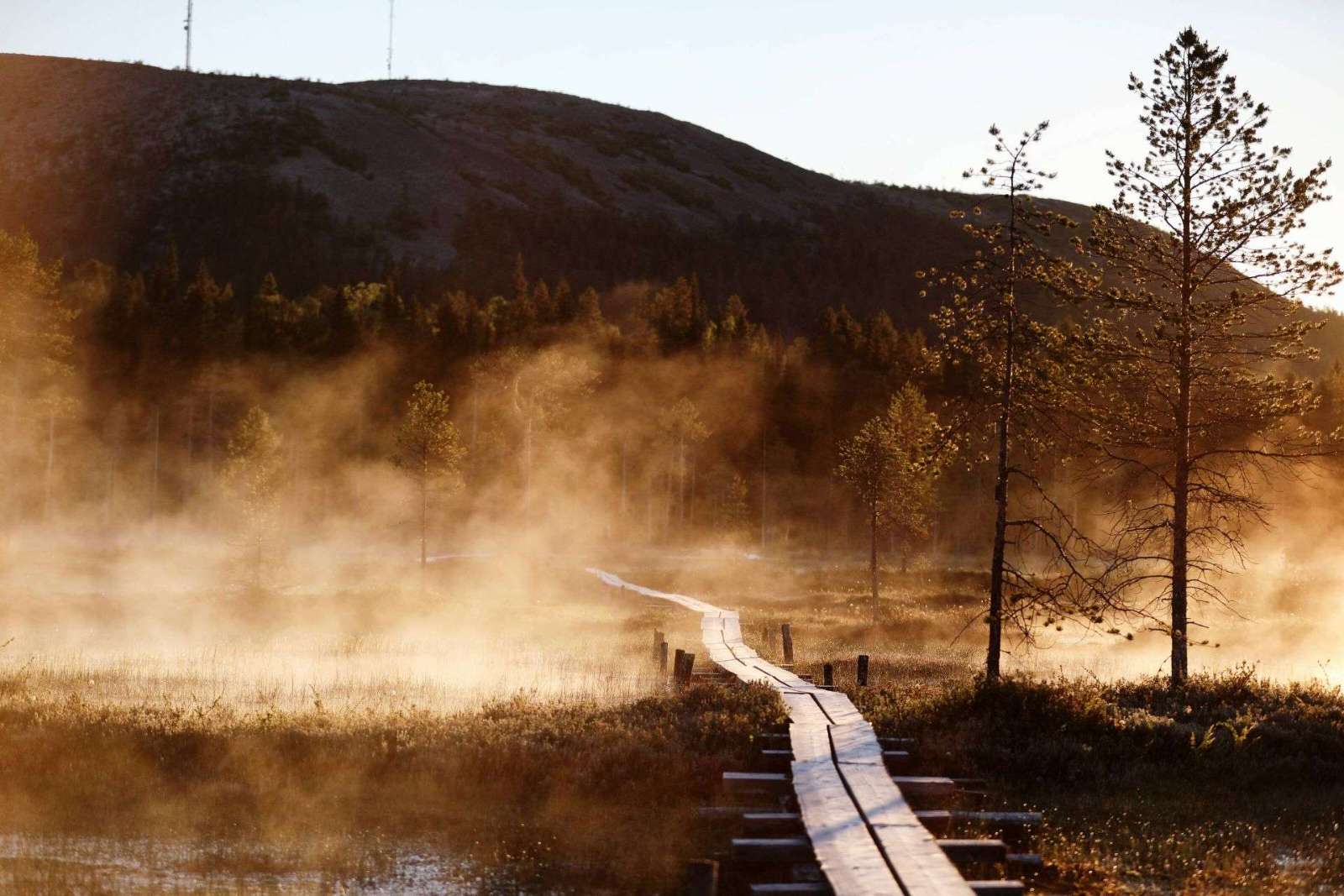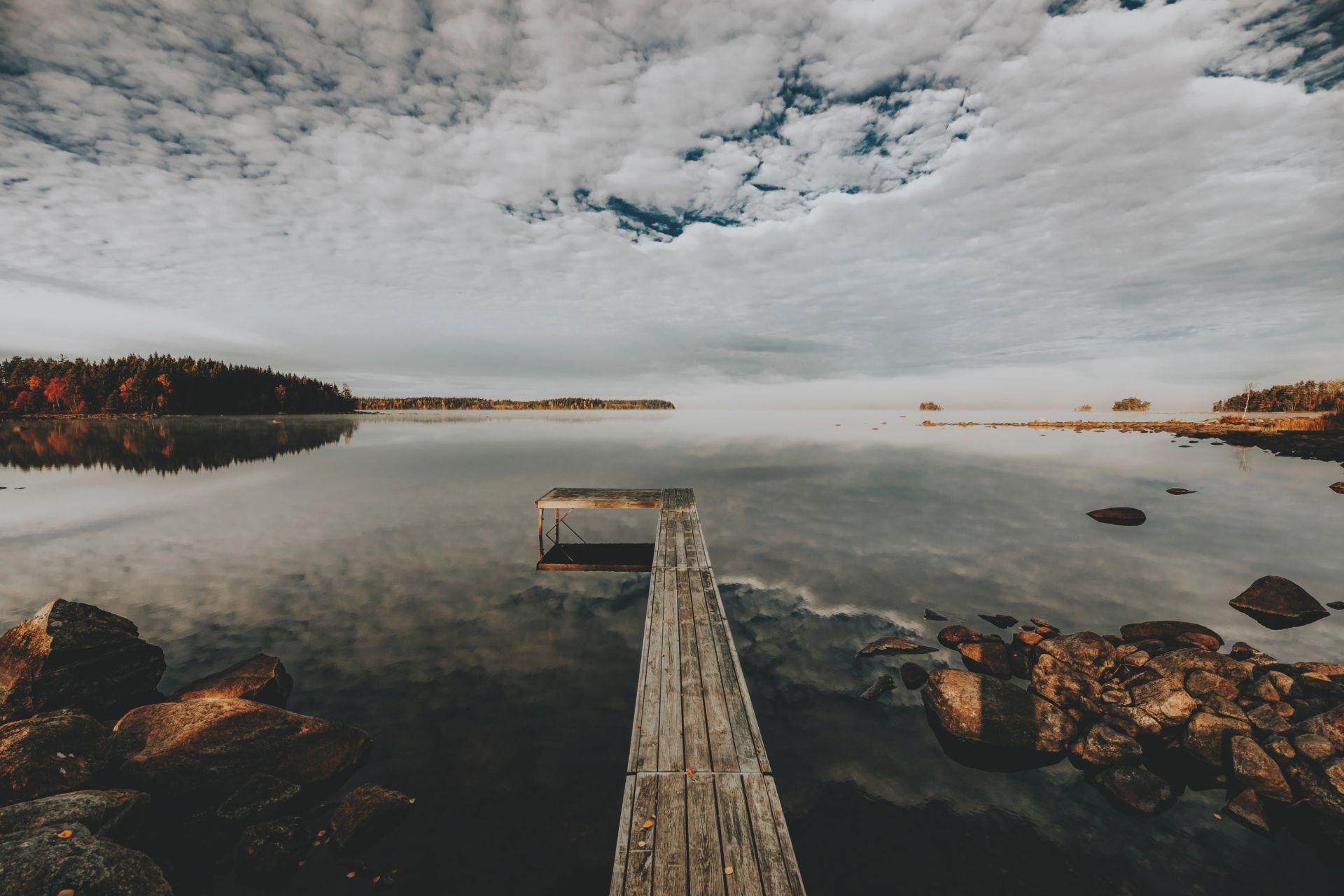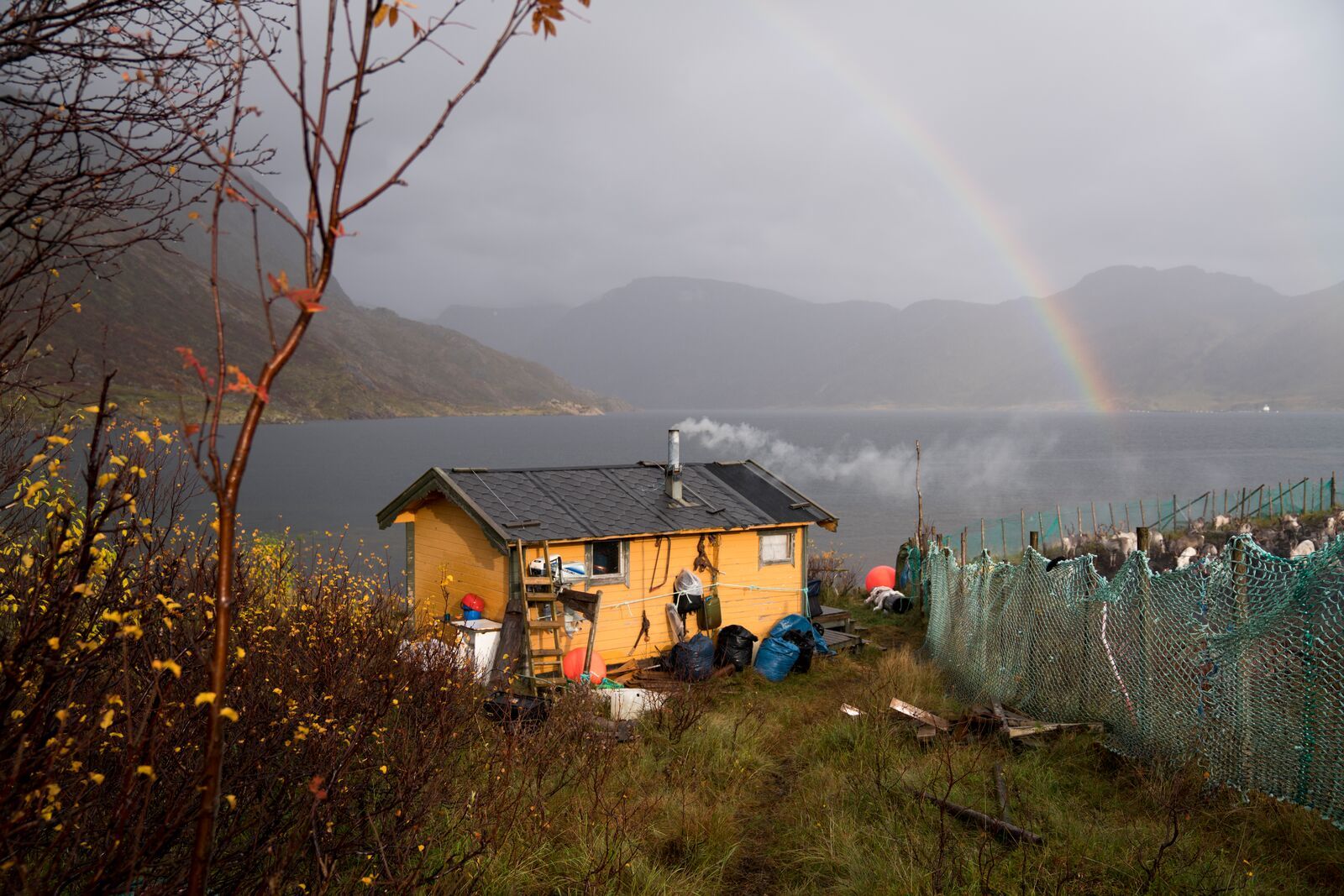
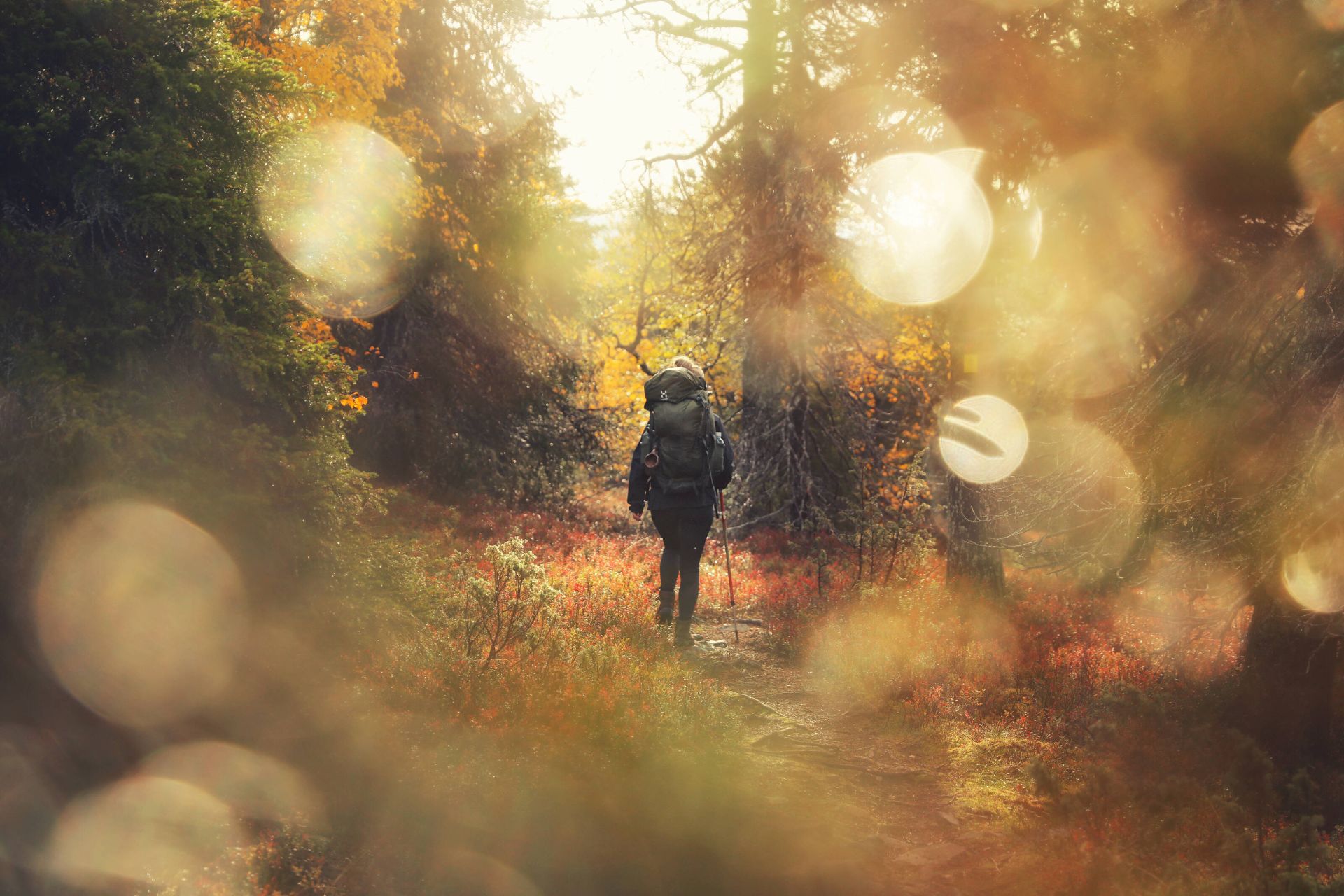
The Finns have a single word for it: ruska, the brief autumn fire when the tundra and birch forests turn crimson, copper and gold. It arrives just as the season’s first dark nights do — and, with luck, the first aurora of the year. Together they make early autumn one of Lapland’s most underrated, and most photogenic, windows.
Ruska — the two-week fire
From the first week of September the fells of northern Lapland turn. The dwarf birch goes scarlet, the aspen and rowan to gold, and for a fortnight the whole landscape glows before the leaves fall. The peak moves steadily south as the cold descends, so timing is everything.
We schedule fell walks, canoe days and low-level flights to meet the colour at exactly the right latitude in the right week.
For the midnight sun and Lakeland saunas, read Finland in Summer →
The aurora, without the deep freeze
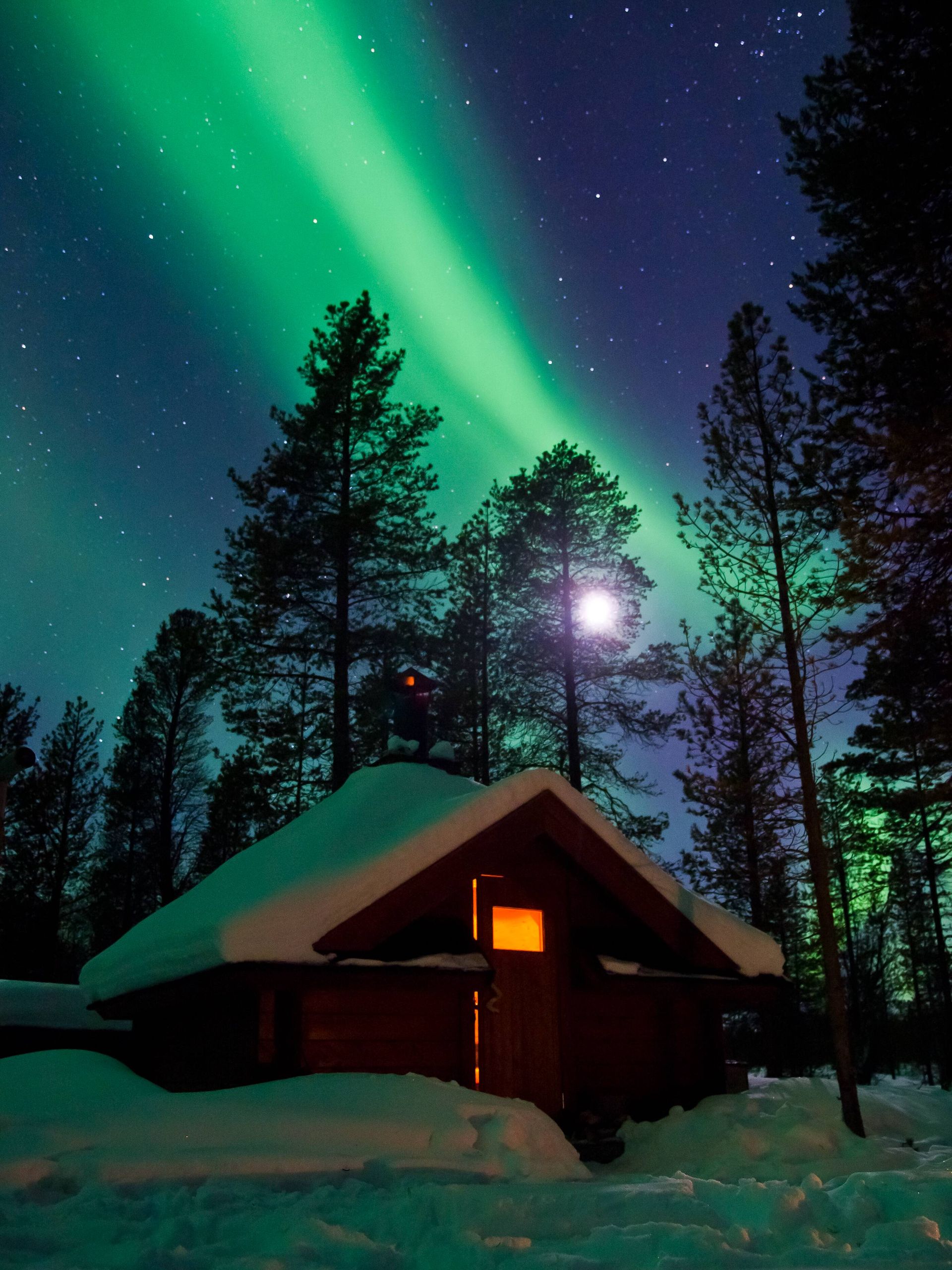
By mid-September the nights are dark enough for the Northern Lights, yet the snow has not arrived and the temperatures remain mild — no minus-thirty, no heavy expedition kit. It is the most comfortable aurora season we sell.
The glass igloos of Saariselkä and the wilderness lodges reopen for autumn, the green light overhead and the ruska colour still on the ground below.
Ruska is the shortest season in Lapland and the most beautiful — fire on the ground, green light in the sky.
The close of the wild season
The bear hides of the eastern taiga close as summer ends, and September brings the elk rut — a charged, atmospheric time in the forest, well before winter locks it down. It is a quietly powerful add-on for wildlife-minded travellers before they turn north for the lights.
Ruska is a moving target — its peak shifts south over about two weeks. We watch the season closely and plan flexible north-to-south routing, to give clients the best chance of meeting the colour at the right latitude.